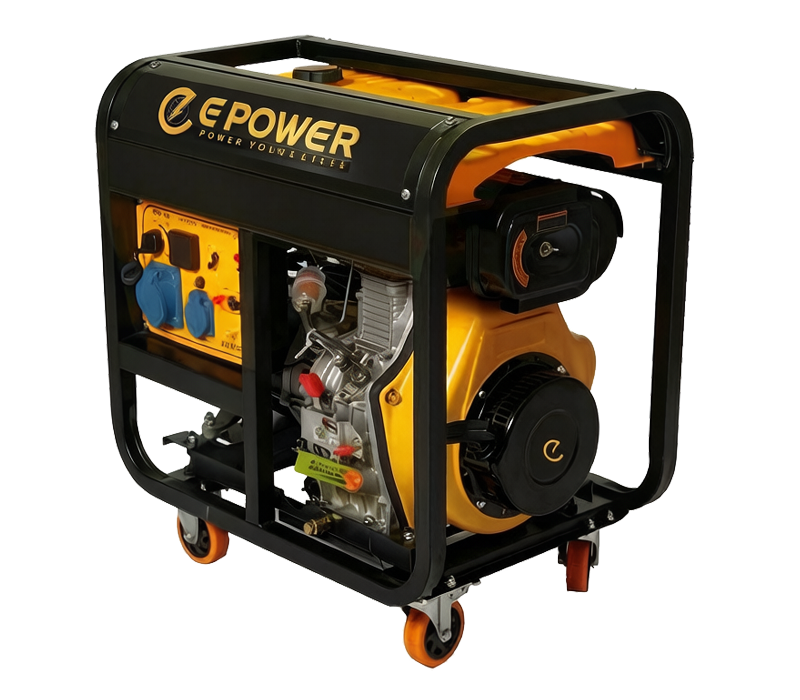
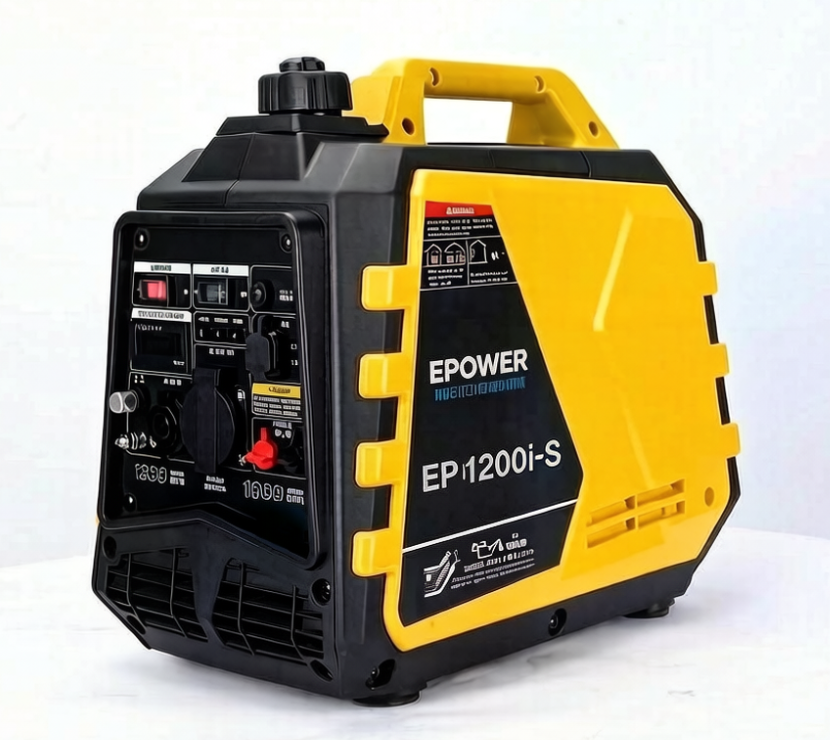
Email :
Aylin@cqepower.com
Ritalin@cqepower.com


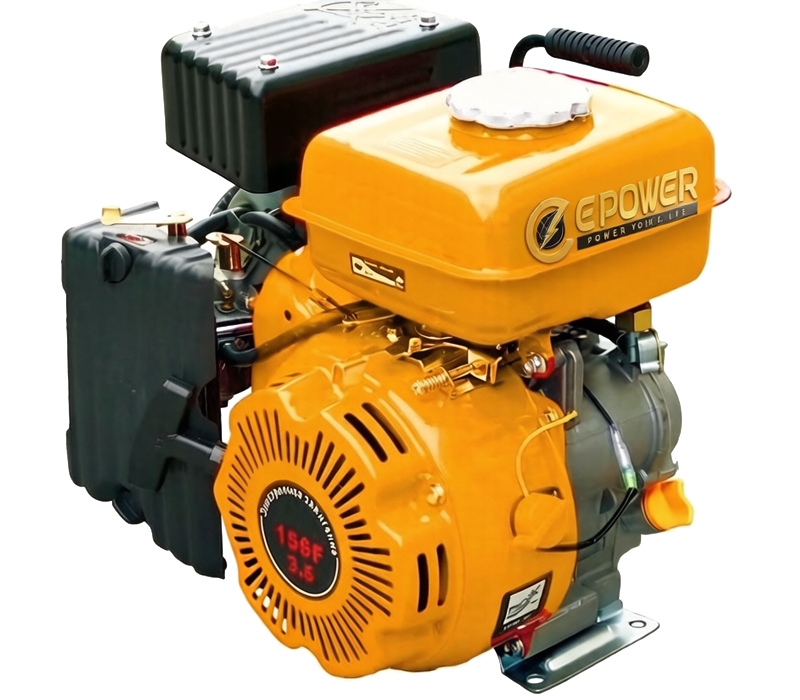
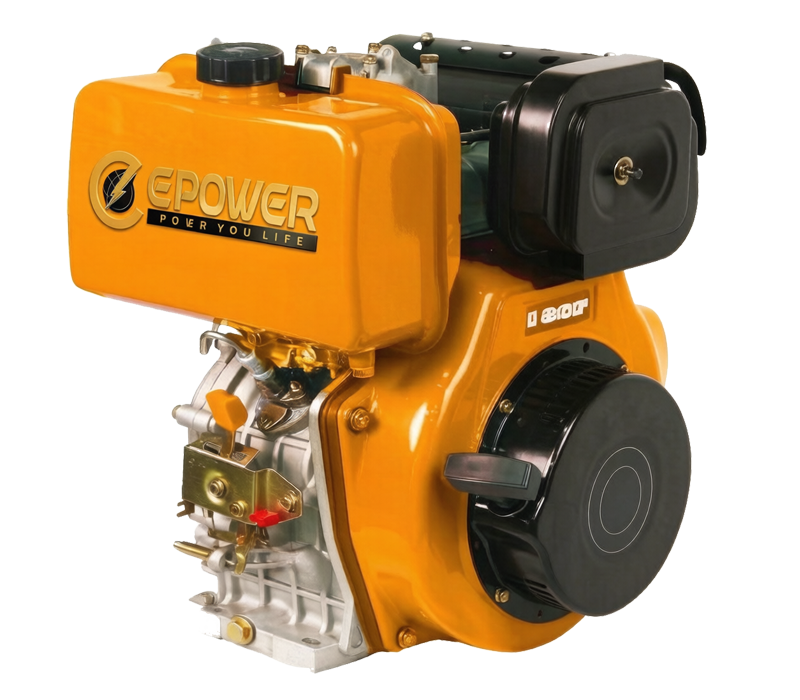
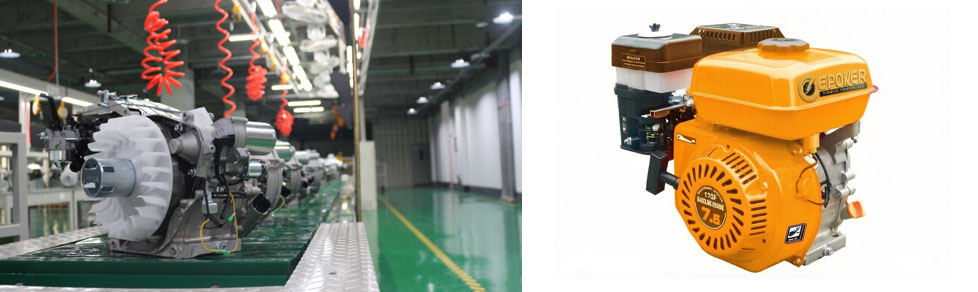
1.Engine
How to choose a suitable general-purpose engine?
The general purpose engine must be chosen according to its power purpose and the final product to ensure it meets operation power, torque and relevant performance requirements and it complies with economic, safe and applicable principle.
Currently, our general purpose engines are: Horizontal engine: it includes a series of engines with 2.5~22 horsepower and they are mainly suitable for generator set, water pump, high pressure pump, mini tiller, snow sweeper and construction machines.
The power and torque of the engine need to be chosen according to rated power/ rated torque or net power/ net torque. Generally speaking, the power and torque of the engine shall not be too big, otherwise the purchasing cost, fuel consumption and discharged pollution will be increased.
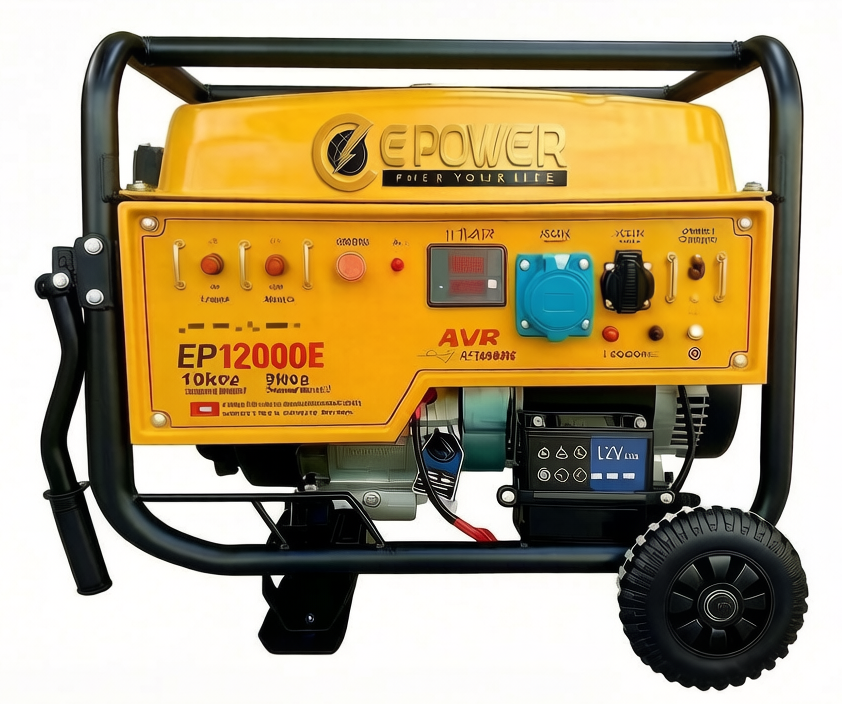
2.Generator
How to choose a suitable generator?
Maximum power and rated power
The power in advertising is generally the maximum power that the manufacturer can produce. However, you can also see the indicated rated power.
Maximum power= the maximum power output that the generator can produce, which normally can only lasts for 30 minutes at cold status.
Rated power= the power under which the generator can work continuously at heat status, and it is normally 90% of the maximum power. Normally, please decide whether the generator is suitable for you according to the rated power.
Starting instantaneous power and normal operating power
Some appliances need extra power when starting. But others do not need extra power when starting and their starting power is just the same as their normally operating power.
To correctly calculate the power you need, you need to know the following two different loads:
Resistance-type load
The resistance-type load is very simple and its starting power is the same as the normally operating power. Resistance-type load includes:
Electric lamp
Coffee machine
Toaster
Reactance-type load:
Reactance-type load has one starting engine that needs more power to start. But after it is in normal operation, it needs far less power. In special circumstances, the starting power is 3 times of the normally operating power. Reactance-type load includes:
Fridge/compressor
Stove/ fan
Water pump
Air conditioner
Power tools
Part of the reactance-type engines do not only needs extra power when starting, but also needs extra power when at the beginning of their operation. For example, when the electric saw starts to cut trees, the power needed increases.
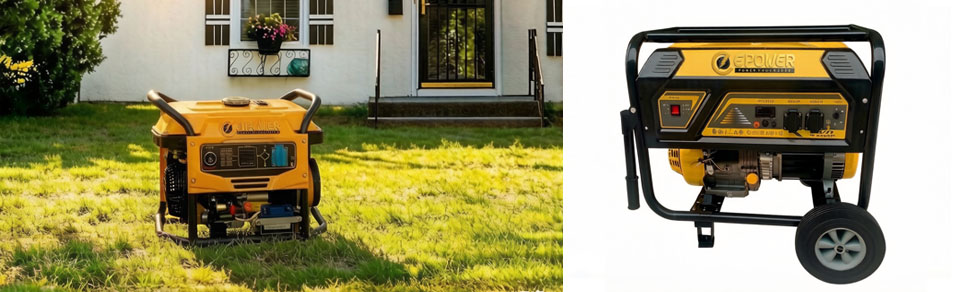
Generator selection for household uses
For the water well and water pump, they normally need a 240V generator with high power (3800W or above).
The natural gas heater needs lower power and it is about 2500 W; the electric heater at least needs more than 4500 W.
The power for household uses usually ranges from 3000 W to 6500 W.
Selection of generators for outdoors activities
It mainly depends on what power you need for you equipment.
In normal conditions, the power of 1000W-2000W can meet most needs.
Selection of generators for industrial purposes :
The power for industrial purposes is more extensive and the power needed depends on the tool type you use. Please refer to Common Electric Appliances Power Reference to help you for a rapid assessment. The simple method is to choose the tools you use and add the power needed.
Please do remember that the tools at the beginning of operation, or the electric appliance with an engine need higher starting power than in normal operating.
Meanwhile, please read Optimal Selection Guide of Generator to help you to use a smaller generator that can meet your requirement.
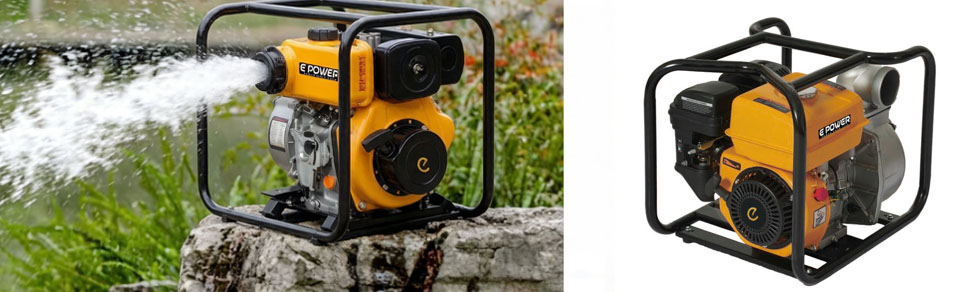
3.Water pump
Water Pump
How to choose a suitable water pump?
When choosing the water pump, make sure that the pump meets the requirement of flow rate and pump lift and complies with economic, safe and applicable principles according to the usage of the water pump.
Choosing the water pump according to the usage
Clean water pump: It is used to convey clean water and other liquids whose physico chemical properties are similar to water, and it is applicable to cold and hot water circulation pressurization such as industrial and urban water supply and drainage, pressurized water supply in high-rise constructions, garden irrigation, heating & ventilating refrigeration cycle, farm irrigation, as well as used to match other equipments.
Sewage pump: it is applicable to convey sewage and waste water which contains fibrous dirt, silt and solid particles of certain particle size.
Water pump that meets the requirement of pump lift
The energy that liquid of unit weight gets from the pump is called pump lift. The pump lift includes suction, and is approximate to the pressure difference between pump outlet and inlet. It is expressed as H and its unit is meter. The pump lift of centrifugal pump takes impeller central line as measurement datum, and it is composed of two parts. The vertical height from the impeller central line to the surface of water source, i.e. the water suction height of the water pump, is called suction lift and it is called suction for short. The vertical height from the impeller central line to the surface of water tank, i.e. the height of water that water pump discharge, is called discharge lift, and it is called discharge for short. Water pump lift= suction lift+ discharge lift. Please be noted that the pump lift indicated in technical parameters refers to the pump lift that the water pump can produce, and it does not include the lift loss caused by the friction to the water flow in the pipeline. When choosing the water pump, please be noted that lift loss cannot be ignored.
The water pump lift is about 1.15~1.20 times of the water lifting height. For an instance, if the vertical height from the water source to water tank is 20 meters, the lift of the water pump needed is about 23~24 meters. The lift indicated in technical parameters of the water pump shall be close to the pump lift needed. In this case, the efficiency of the water pump can be higher and it will be more economical. However, it does not mean exactly the same, and generally speaking, the water pump can also work more efficiently when the deviation is no more than 20%.
Is it right to buy the water pump with pump lift as high as possible? Of course not. If the water pump with high pump lift is used in low lift, water flow will be excessive and engine will overload. In long-term operation, the engine temperature will rise and will cause rapid wear of engine parts.
Chemical pump: it is mainly used to transfer and circulate chemical corrosive liquid, and it is applicable to industry, research institute and lab and so on.
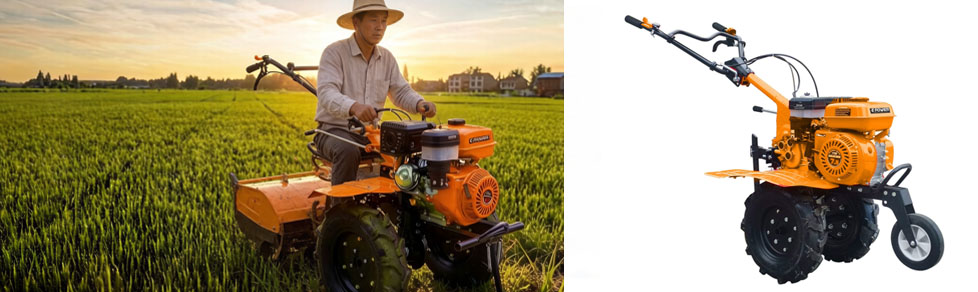
4.Agriculture Tiller
How to Choose a Quality Mini Tiller (Micro Cultivator)
Choosing a reliable mini tiller is crucial for efficient gardening and small-scale farming. Here’s a quick guide to help you select the best one:
Power Source & Engine:
Gas-Powered: More powerful, best for larger areas (0.5+ acres) and tough, compacted soil. Look for reputable brands (e.g., Honda, Briggs & Stratton) for durability.
Electric (Corded/Battery): Quieter, lighter, and low-maintenance. Ideal for small gardens (<0.3 acres), soft soil, and noise-sensitive areas. Check battery voltage (e.g., 40V-80V) and runtime for cordless models.
Key Features to Consider:
Tilling Width & Depth: Widths range from 10-24 inches. Choose based on your garden bed size. Adjustable depth (up to 8-10 inches) is essential for different tasks.
Tine Type: Bolo Tines (curved) are best for breaking new ground. Slasher Tines (straight) are better for mixing soil in established beds.
Transmission & Gears: Chain/ Gear Drive is more durable for heavy use. Multiple forward speeds and a reverse gear greatly improve maneuverability and control.
Weight & Handling: Lighter machines (under 100 lbs) are easier to transport but may bounce in hard soil. Heavier models offer better stability. Adjustable handles and wheels enhance comfort and control.
Build Quality & Warranty:
Look for a sturdy steel frame, durable tines, and sealed gearboxes.
Micro cultivators offer significant benefits over manual tools and larger machinery:
Superior Efficiency & Labor Saving: Drastically reduces time and physical effort compared to hand digging. Perfect for quick weeding, aerating, and mixing in compost.
Excellent Soil Health: Aerates the soil deeply, improving oxygen, water, and nutrient flow to plant roots. Prevents soil compaction.
Versatility: With attachments, they can be used for furrowing, hilling, dethatching lawns, and even clearing light snow.
Precision & Maneuverability: Their compact size allows for easy operation in tight spaces, between rows, and around existing plants without damaging them.
Cost-Effective: More affordable to purchase, operate, and maintain than large tractors. Ideal for homeowners, urban gardeners, and small-scale organic farms.
In summary, for a quality mini tiller, prioritize a reliable engine, solid construction, and features matching your soil type and garden size. Its core advantages are saving time, enhancing soil quality, and providing versatile, precise cultivation for small to medium-sized plots.